Most plumbing upgrades start with a leak, a drop in water pressure, or rusty water from the tap. The real question is whether you patch the problem again or replace the water lines for good. If you are trying to figure out when to repipe your house, this guide walks through the signs that point to a repipe, how long each pipe material really lasts, and what separates a repipe that lasts decades from one that causes new problems.
Here’s the quick version:
- Repeated leaks, low pressure, and brown or rusty water are the most common signs your home needs a repipe.
- Pipe age matters, but condition matters more. Galvanized steel is usually the first to fail; copper often lasts 50 years or longer.
- PEX is the most common repipe material today because it resists corrosion and scale and installs with far fewer fittings.
- Where new PEX meets old copper, the connection must use lead-free, code-listed fittings installed by a licensed plumber.
- A whole-home repipe that replaces the entire potable system outlasts piece-by-piece repairs.

Signs It’s Time To Repipe Your House
One leak does not mean you need new plumbing. A pattern does. If you notice two or more of the signs below, it is time for a professional inspection.
Low Or Dropping Water Pressure
When pressure is weak at several fixtures at once, the cause is often inside the pipes. Older galvanized lines build up rust and mineral scale on the inside wall, which narrows the opening a little more every year. Cleaning an aerator will not fix that.
Brown, Yellow, Or Rusty Water
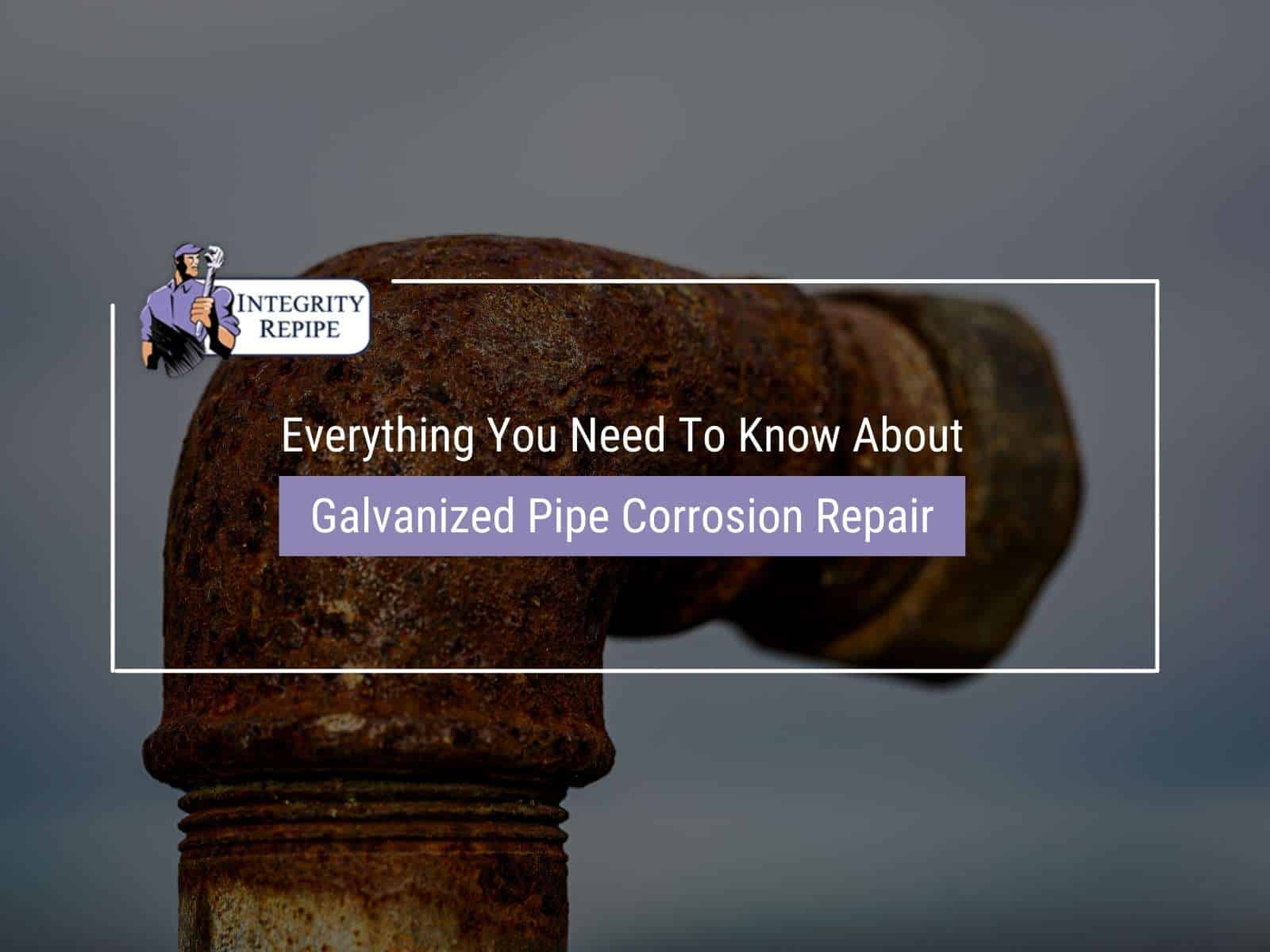
Discolored water, especially first thing in the morning or after a vacation, usually means the inside of the pipe is corroding. If you have galvanized plumbing, our guide to galvanized pipe corrosion repair explains what is happening and your options.
Repeat Leaks And Pinhole Leaks
Pinhole leaks in copper tend to show up in clusters. Fixing one section often moves the failure to the next weak spot down the line. If you have paid for more than one leak repair in the last few years, compare the running cost against a full repipe.
Visible Corrosion On Exposed Pipes
Check the pipes under sinks, at the water heater, and in the garage or crawl space. Green or white crust on copper joints, and rust or flaking on galvanized pipe, are signs the metal is breaking down.
Banging, Rattling, Or Whistling Pipes
Noisy pipes can point to loose straps, high water pressure, or restricted lines. Noise on its own is not a reason to repipe, but noise plus any of the signs above is worth a closer look.
Slab Leaks
Warm spots on the floor, the sound of running water with every tap off, or a water bill that jumps for no reason can mean a leak under your foundation. Many homeowners with one slab leak end up choosing to reroute the lines overhead rather than break into the slab again later.
How Long Do Plumbing Pipes Last?
Age is a useful starting point, but it is not a deadline. Water chemistry, water pressure, and the quality of the original install all change how long pipes hold up. These are the commonly cited service lives for the main residential water line materials:
| Pipe Material | Typical Service Life | What Usually Fails |
|---|---|---|
| Galvanized steel | About 40 to 50 years | Internal rust and scale that restrict flow and discolor water |
| Copper | 50 to 70 years | Pinhole leaks and corroded joints, faster with aggressive water |
| PEX | Rated around 40 years or more | Mostly installation errors: sun damage before install, wrong fittings, improper connections |
Sources: copper and PEX figures from InterNACHI’s Estimated Life Expectancy Chart, which lists copper water lines at 50 to 70 years and PEX at 40. The galvanized estimate is the commonly cited range for galvanized water piping.
If your home was built before the 1960s and still has its original galvanized lines, it is very likely past its useful life. Homes with copper from the 1970s and 1980s are worth inspecting, especially if you have started seeing leaks.
Repair Or Repipe: How To Decide
A spot repair makes sense when the problem is isolated and the rest of the system is healthy. A repipe usually makes more sense when:
- You have had two or more leaks in different parts of the house.
- The home still has galvanized supply lines anywhere in the system.
- Water quality or pressure problems show up at multiple fixtures.
- You are already opening walls or ceilings for a remodel.
- You have a slab leak and want to avoid future ones under the foundation.
A repipe replaces the entire potable water system instead of chasing the next weak spot. At Integrity Repipe, that means full abandonment of the old supply lines, no hidden extras, and no subcontractors, backed by our lifetime guarantee on materials and labor.
PEX Or Copper: Choosing A Long-Lasting Repipe Material
Both copper and PEX are proven materials. For most Southern California homes, we recommend PEX, and here is why:
- Corrosion and scale resistance: PEX does not corrode, which removes the main cause of pinhole leaks and flow loss.
- Fewer fittings: Flexible tubing makes long runs with fewer joints, and fewer joints mean fewer places for a leak to start.
- Quieter lines: PEX absorbs water hammer better than rigid pipe.
- Less wall damage: Flexible tubing can be fished through walls and ceilings through smaller openings.
- Freeze tolerance: PEX can expand when water freezes, where rigid pipe is more likely to split.
Copper is still a great choice in some situations, such as exposed runs or homeowner preference. For a side-by-side breakdown, see our copper vs. PEX B comparison, or learn more about our PEX repipe service.
How Pros Tie New PEX Into Existing Copper
Not every job is a full repipe. When new PEX has to connect to copper that is staying in place, such as at the water heater, the main shutoff, or a stub-out, the transition point is where leaks happen if it is done wrong. Here is what a professional connection involves.
Lead-Free Materials Only
Federal law requires that any pipe, fitting, solder, or flux used for drinking water be lead free. Under the Safe Drinking Water Act, that means no more than a 0.25% weighted average of lead on wetted surfaces and no more than 0.2% lead in solder and flux, per the U.S. EPA. Our repipes are built as a lead-free, yellow-brass-free system.
The Right Transition Fitting For The Job
There are several ways to join PEX to copper. Each has its place, and each must be listed for the PEX product being installed:
- Sweat adapters: A lead-free brass adapter is soldered to the copper first, then the PEX side is connected once the fitting has cooled, so heat never reaches the tubing.
- Crimp and clamp connections: Metal rings compressed with a calibrated tool. Reliable when the tool is checked with a go/no-go gauge.
- Expansion connections: The tubing is expanded, slipped over the fitting, and shrinks back to form a full-strength seal.
- Press fittings: A powered press tool seals the connection with no heat and no open flame.
- Push-fit fittings: Fast and tool-free, and useful for temporary or emergency repairs. Most repipe specialists avoid them for permanent, concealed connections.
Matching Tubing, Fittings, And Tools
Every PEX system is tested and warrantied as a set: tubing, fittings, and tools from the same system. Mixing brands or using the wrong tool can void the manufacturer’s warranty and weaken the joint. We install American-made Zurn PEX with the matching Zurn expansion system, so each connection is full strength the moment it is made.
Mistakes That Shorten The Life Of A Plumbing Upgrade
Leaving PEX In The Sun
PEX is built for protected indoor runs, not sunlight. Each tube carries a code showing how long it can tolerate UV exposure before installation. Per Plumbing & Mechanical, the second digit of the tubing’s code marks its rating, from about 30 days up to six months. Good installers keep tubing covered until it goes in the wall.
Partial Repipes That Leave Old Lines In Service
Replacing only the leaking section leaves the rest of the aging system in place. The next failure is usually close behind.
Skipping Pressure Control
High street pressure strains every pipe, joint, and fixture. A working pressure regulator protects your new plumbing and your appliances.
Uninsulated Hot Water Lines
Insulating hot lines keeps water hotter on the way to the tap and cuts wasted water while you wait. We insulate the hot water lines under your house on every repipe, using the materials described on our materials page.
Poor Drywall Repair
A repipe is not finished until the walls are. Ask any repipe company whether they patch and repair drywall themselves or leave that to you.
Keep Your New Plumbing Running For Decades
- Have your system checked by a licensed plumber once a year.
- Keep water pressure in a safe range with a pressure regulator.
- Consider a water softener if you have hard water.
- Flush your water heater once a year to clear sediment.
- Keep grease, food scraps, and wipes out of drains and toilets.
- Know where your main shutoff is, or add an automatic shutoff valve to stop a leak before it becomes water damage.
What Homeowners Say About Their Repipe
Integrity Repipe holds a 4.6 star rating across 46 Google reviews for our San Clemente office. Here is what a few recent repipe customers had to say.
★★★★★
“Integrity repipe did a fantastic job re-piping my home. Two people from my work recommended I reach out to Integrity Repipe, and I’m glad I did. Integrity provided competitive pricing, and included City inspection. The installation was professional. The estimator was very knowledgeable and answered all of my technical questions, which were in depth questions since I’m a civil engineer. Within one day the crew re-pipped my 2 bedroom 2.5 bathroom home. Then inspection by the City on a separate day. Followed by one more day of patching drywall. Pictures here show how the drywall patching work looks almost like the original. Each time the crews prepped the area to keep everything as clean as possible. You’ll need to do a final clean after and paint the area. Overall, I recommend Integrity Repipe to everyone looking for this type of work.”
Edgar Gomez, Google Review
★★★★★
“The last thing somebody wants to hear as a homeowner… full house Repipe… Everybody in our neighborhood was experiencing slab leaks over the last few years and it finally caught up to us. A friend of mine after I posted on Facebook recommended Integrity Repipe, which came up as a recommendation on Facebook as well… After meeting with four different companies, I finally pulled the trigger. They showed up on time w/ I don’t know maybe 10 workers here working on my house. Inspector came the next morning, patch and Repair did a fabulous job and was really done completely in three days. I’m amazed, totally professional the best price in town for San Clemente residence. Highly recommend these guys and Noel the guy that actually comes out to your house and does the initial walk-through is the best.”
Mike Bohn, Google Review
★★★★★
“We experienced a leak and after our local plumber came to see the issue we determined there were too many additional issues with our 26 year old copper pipes and that we should replace with PEX, he also recommended Integrity Repipe and I’m sure glad he did. They came by the same day I called with a quote and a very fair price when comparing to others I know having their system replaced. The Repipe work was done the following Wednesday. The inspection was done on Thursday and all the drywall was done on Friday. The integrity team did a great job communicating every step of the way, we really enjoyed working with Noel, Guillermo, Brian, Kevin, and Heather. We highly recommend their service to anyone needing to have their plumbing system replaced in genuine Zurn PEX, we had the absolute best experience!”
Dan Walsh, Google Review
Frequently Asked Questions About Repiping
How Do I Know If My House Needs To Be Repiped?
Look for a pattern: repeated leaks, low pressure at several fixtures, rusty or discolored water, and visible corrosion. Galvanized pipes anywhere in the home are also a strong signal. A professional inspection can confirm the condition of the lines.
How Long Does A Whole House Repipe Take?
It depends on the size and layout of the home, but PEX repipes move faster than copper because there are fewer fittings to install. A common schedule is one day for the repipe, a city inspection, and then drywall patching, often wrapped up within about three days. We cover the timeline in detail in how long a PEX B repiping project typically takes.
Is PEX Safe For Drinking Water?
Yes. The Zurn PEX tubing we install is certified to NSF 61 for safe use with potable water and is free of heavy metals like lead, and free of BPA.
Is It Better To Repipe With PEX Or Copper?
For most homes, PEX offers better corrosion resistance, fewer joints, and quieter operation at a lower installed cost. Copper remains a solid option for exposed runs or when a homeowner prefers it.
Do I Need To Repipe If I Only Have One Leak?
Not always. A single leak from physical damage or a failed fitting can usually be repaired. If the leak came from corrosion, or you have galvanized pipe or copper that is several decades old, the rest of the system is likely wearing the same way, and a professional inspection will tell you which situation you are in.
Does A Repipe Require A Permit And Inspection?
Yes. A whole-house repipe is permitted work, and the new lines are inspected by the city before the walls are closed up. Our repipes include the permit and the city inspection, so you are not left coordinating it yourself.
Will Repiping Damage My Walls?
A repipe needs small openings in walls and ceilings to route the new lines. Our crews protect your home before work starts and patch the drywall themselves once the inspection passes, so the finished repair is ready for your paint.
Does Repiping Add Value To A Home?
New plumbing removes a major concern for buyers and inspectors. See our guide to plumbing upgrades that boost your home’s value for more.
Talk To A California Repipe Specialist
If your home is showing the signs above, a professional inspection is the best next step. Integrity Repipe technicians are trained by owner and master repiper Joe Ludlow to inspect, repipe, and repair drywall as one clean, complete job. Every repipe uses American-made materials and is backed by a lifetime warranty on materials and labor.
Contact us for a free estimate, or call 949-397-2404.

Published by – Integrity Repipe, Inc
Email: [email protected]
Website: www.integrityrepipe.com
Mission Viejo, CA
27281 Las Ramblas, Suite 200
Mission Viejo, CA 92691
Phone: 877-473-7473
San Clemente, CA
927 Calle Negocio Suite O
San Clemente, CA 92673
Phone: 949-397-2404
Long Beach, CA
2201 N Lakewood Blvd, Ste D #297
Long Beach, CA 90815
Phone: 562-362-5040
Chula Vista, CA
591 Telegraph Canyon Road
Chula Vista, CA 91910
Phone: 619-313-5744
Ladera Ranch, CA
27762 Antonio Parkway L1
Ladera Ranch, CA 92694
Phone: 949-397-2795
Lakeside, CA
8337 Winter Gardens Boulevard
Lakeside, CA 92040
Phone: 619-494-3507
Aliso Viejo, CA
27068 La Paz Rd #771
Aliso Viejo, CA 92656
Phone: 949-449-1142
Oceanside, CA
1759 Oceanside Blvd C,
Oceanside, CA 92054
Phone: 442-300-3057
Porter Ranch, CA
19360 Rinaldi
Porter Ranch, CA 91326
Phone: 818-630-9265